
A pair of $40 shoes that dies in eight months costs more than a pair of $220 shoes that lasts six years — and that single math error is why most men keep buying the wrong footwear.
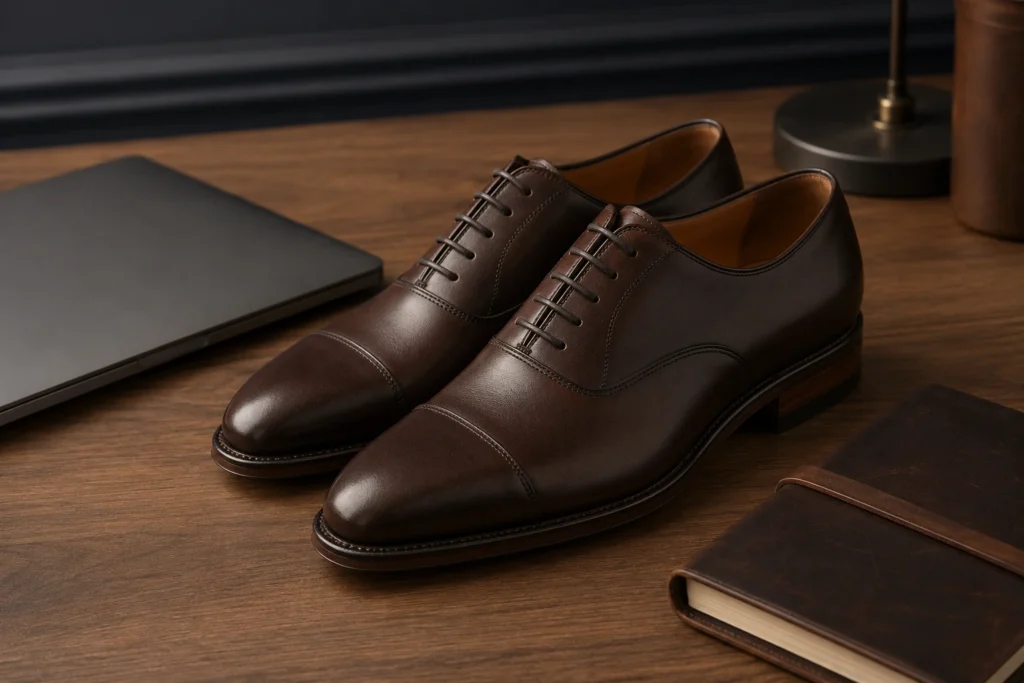
The Cost-Per-Wear Math Nobody Runs
Founders run unit economics on everything except their own feet. Apply the same discipline here and the case for branded shoes for men becomes obvious.
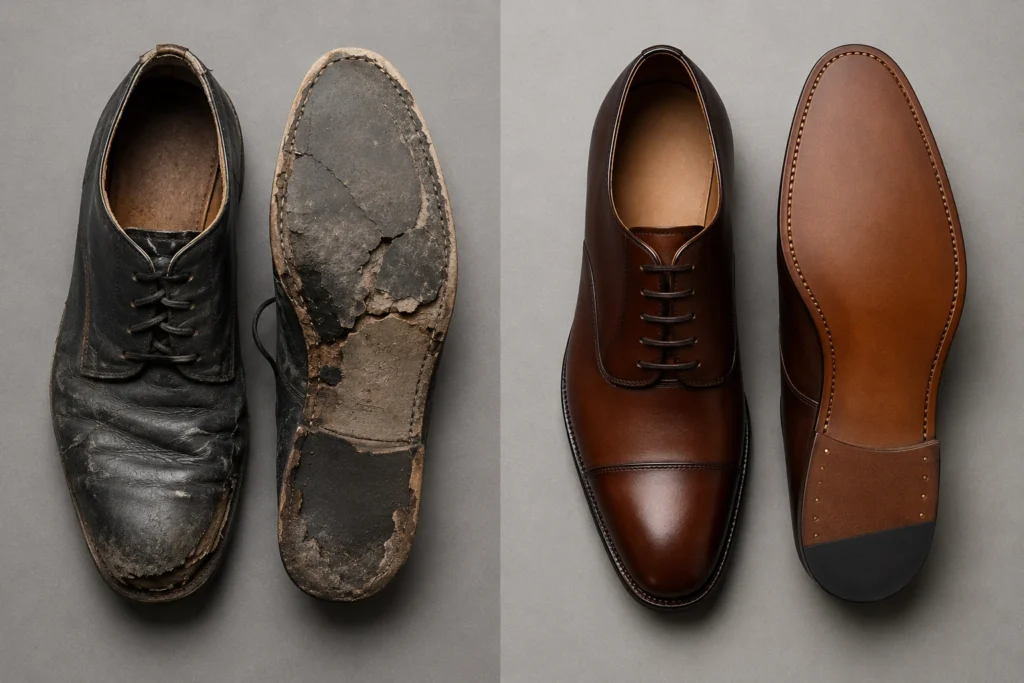
Take a generic $45 dress shoe from a mall retailer. The sole delaminates within a year of regular wear, the leather cracks at the crease points, and most men replace the pair after 150–200 wears. That’s roughly $0.25–$0.30 per wear before you even factor in resoling, which usually isn’t possible because the construction is glued, not stitched.
Now take a branded pair — something like an Allen Edmonds Park Avenue or a Church’s Consul — priced around $350–$450. These use Goodyear-welted construction, which means the upper is stitched to a welt rather than glued directly to the sole. When the sole wears down, a cobbler replaces just the sole and heel for $80–$120, and the shoe returns to near-new condition.
Founders who buy branded shoes for men in this construction category routinely report 8–10 years of use across two or three resoling cycles. Run the math: $400 purchase price, two resoles at $100 each, spread across 2,000 wears (roughly one wear per week for eight years), and you land at $0.30 per wear — the same as the cheap pair, except you’re not buying a new pair of shoes four times during that period, you’re not dealing with blisters from broken-down midsoles, and you’re not showing up to a Series B pitch meeting with a scuffed toe.
The real ROI story is time, not just dollars. A founder replacing cheap shoes every eight months spends time researching, ordering, breaking in, and eventually discarding four to five pairs across the same period a single branded pair covers. That’s four to five purchase decisions, four to five shipping delays, four to five break-in periods where the shoe rubs and underperforms. Branded shoes for men remove that recurring tax on your attention — a resource every operator at a Series A company already has too little of.
Resource:- Allen Edmonds’ recrafting service
Construction Quality: What Actually Separates the Brands
Most men can’t articulate why a $350 shoe outperforms a $60 shoe beyond “it feels nicer.” The difference is measurable, and it comes down to three things: leather sourcing, sole construction, and last shape.
Leather sourcing. Premium brands buy full-grain leather, the outermost layer of the hide, which retains the tight natural grain and develops a patina over years of wear. Budget manufacturers use corrected-grain or bonded leather — the surface gets sanded down to hide imperfections, then a printed grain pattern gets stamped on top. Corrected-grain leather cracks because the sanding process removes the strongest fibers near the surface. Full-grain leather flexes and ages instead of splitting.
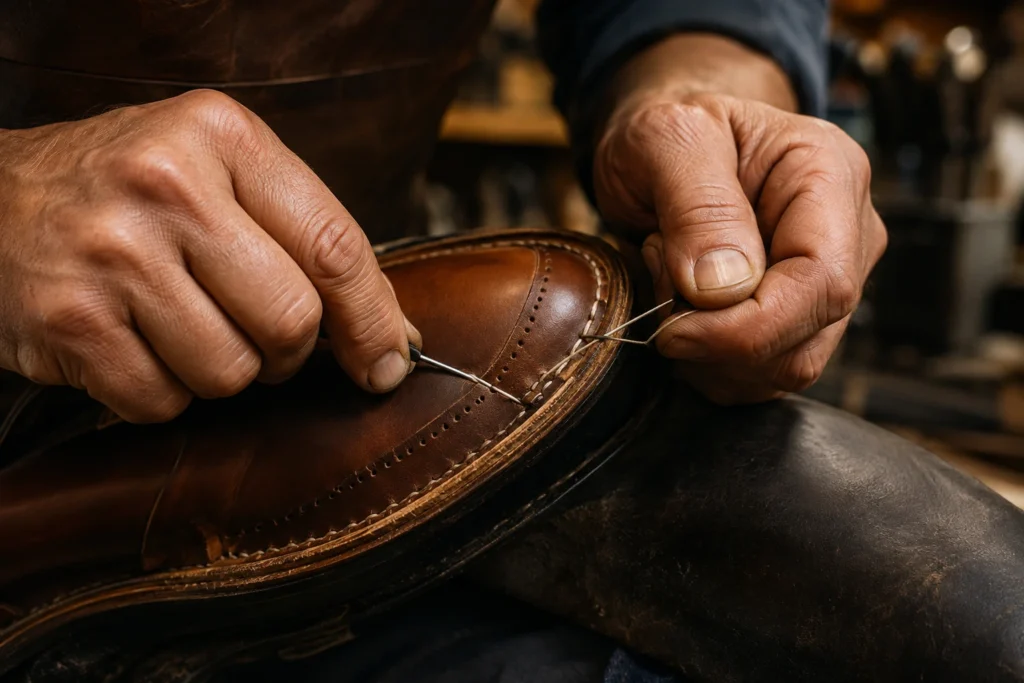
Sole construction. This is the single biggest differentiator among branded shoes for men. Cemented construction — gluing the upper directly to the sole — is cheap and fast, but once the glue bond fails, the shoe is done. Goodyear welting, Blake stitching, and hand-welting all attach the upper through stitching rather than adhesive, which means a cobbler can rebuild the shoe from the ground up multiple times. Brands like Alden, Crockett & Jones, and Carmina build almost their entire men’s line on welted construction specifically because it turns a shoe into a maintainable asset rather than a disposable product.
Last shape. The last is the foot-shaped mold a shoe is built around, and it determines fit far more than size labels do. Mass-market factories use a small number of generic lasts across dozens of styles to cut tooling costs, which is why cheap shoes often pinch at the toe box or gap at the heel regardless of size. Established brands maintain proprietary lasts refined over decades — Alden’s Aberdeen last, Edward Green’s 202 last — and fit becomes consistent across their entire catalog. Once you find a brand whose last matches your foot, every future purchase from that brand becomes a near-guaranteed fit, which eliminates the return-and-reorder cycle that eats time and money with unbranded options.
The Professional Signal: Real Examples, Not Vibes

Skeptics dismiss shoe quality as vanity. The counterargument isn’t theoretical — it shows up in how people read competence signals in rooms where trust hasn’t been established yet.
Investors, enterprise buyers, and senior hires form impressions in the first ninety seconds of a meeting, long before your deck loads. Clothing researchers who study perception consistently find that people extrapolate broader judgments — attention to detail, financial discipline, seriousness — from small, visible cues. Shoes sit at the bottom of that visual field, which means they’re either the detail nobody notices because it’s right, or the detail everybody notices because it’s wrong. A cracked toe box or a run-down heel reads as neglect even on someone wearing a well-tailored suit above it.
Compare two founders walking into the same Sand Hill Road meeting. One wears a $70 shoe with a visibly worn heel counter and a synthetic sole that’s started separating at the toe. The other wears a $300 pair of branded shoes for men with a clean sole edge and a leather sole that’s just been re-heeled. Neither founder mentions their shoes. Neither investor consciously scores them on footwear. But the second founder’s overall presentation reads as more buttoned-up, and in a meeting where every other signal is close, that difference matters.
The same logic applies internally. Enterprise sales teams that dress with visible care close larger contracts more consistently, not because the shoes persuade the buyer directly, but because consistent attention to physical presentation correlates with the same conscientiousness that shows up in contract terms, follow-through, and account management. Branded shoes for men aren’t a magic trick — they’re one input into a broader signal of competence that compounds across every interaction where trust needs to be built quickly.
How to Actually Buy: A Founder’s Playbook
Buying branded shoes for men well doesn’t require becoming a menswear enthusiast. It requires four decisions, made once, that pay off for a decade.
Resource:- r/goodyearwelt sizing discussions
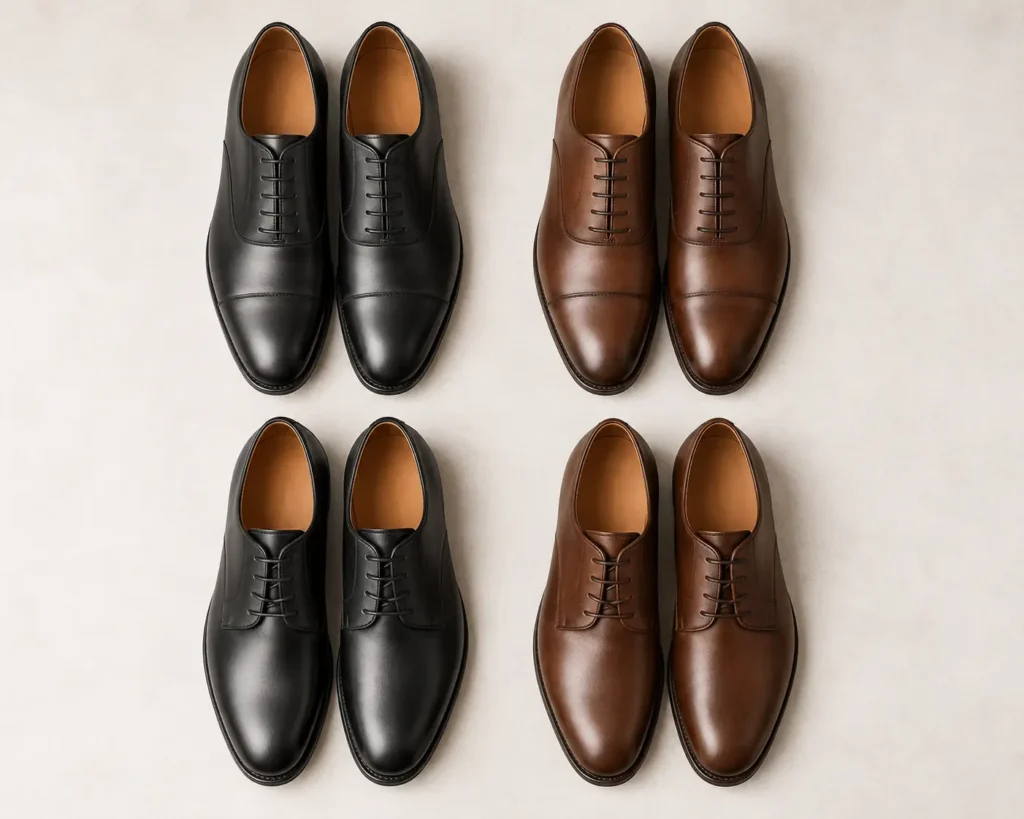
Pick two silhouettes and stop there. A cap-toe oxford covers formal settings — board meetings, fundraising, weddings. A plain-toe derby or chukka covers everything else — client dinners, conference travel, casual Fridays. Founders who try to build a five-shoe rotation end up wearing the same two pairs anyway; buy two pairs well instead of five pairs poorly.
Buy black and buy brown, in that order. Black works with charcoal and navy suits and reads correctly in every formal context. Brown — specifically a mid-to-dark brown, not tan — works with everything else and ages into a richer patina than black ever will. Two colors, two silhouettes, four total pairs, and a founder is dressed for every scenario a Series A schedule throws at them.
Buy one size down from your sneaker size if the brand runs true. Dress shoes should fit snugger than sneakers because leather stretches with wear and doesn’t rebound the way mesh does. Most brands publish fit guides; check Reddit’s r/goodyearwelt or the brand’s own sizing notes before ordering, because a shoe that’s a half-size off never breaks in correctly no matter how good the leather is.
Find a cobbler before you need one. The entire ROI argument for branded shoes for men collapses if the soles wear through and nobody resoles them. A fifteen-minute search for a local cobbler who works with Goodyear-welted shoes, done once, turns every future pair into a multi-decade asset instead of a five-year disposable. This single step is the difference between the cost-per-wear math actually playing out and the shoes quietly becoming another unworn pair in the closet.
Skip the temptation to buy trendy or seasonal colorways. Classic black and brown branded shoes for men in cap-toe and plain-toe silhouettes never go out of rotation, which means the resale value stays higher and the styling decision never has to be revisited. A founder optimizing for speed shouldn’t spend decision cycles on shoe color every six months — solve it once with proven silhouettes and move on to problems that actually require ongoing attention.
The numbers, the construction quality, and the professional signal all point the same direction. Buy fewer pairs, buy them well, and let the shoes stop being a recurring decision.
Written by roni19dgcreative.com